It had been a while since we saw 6am, but surprisingly we were back into the swing of things very quickly. Up, dressed, fed and watered in perfect timing as we arrived downstairs ready for the day we were greeted by our tour guide; Omar. Approximately 15 tourists were aboard the minibus we were ushered onto, and not long after being seated we departed Quito for the day. We removed unnecessary layers within seconds, the breeze blew through open windows and carried with it the alternative dialects of foreigners aboard the bus. Omar interrupted the flow of languages, with a welcome speech conducted initially in English and then his native Spanish. His enthusiasm was refreshing, awakening our brains as he pointed out every Volcano en route (and throughout the day) with detailed knowledge of each one. By the end of the trip we would be more geographically educated than we ever were at school, and one of us even boasts a GCSE in the subject! Every fact was interesting and in exchange of a lecture, Omar was a storyteller of information and we absorbed every page. Spongeing up more than our adolescent selves would have done so after a long hauled revision cramming session.
First stop: The indigenous food market
Most european markets are hosted in bustling town centres, with a neatly arranged strip of colourful striped marquees, an aroma of freshly baked goods will scent the brisk morning air and prices are chalked up next to each stand. It is with confidence we can stereotype this as a generalised image when the word ‘Market’ is phrased upon the presence of a westerner. This could not be more far fetched from the sight we arrived at. Down a dusty dirt road, with crooked houses we came to a halt at an area around the size of a football pitch, with a corrugated iron roof and open sides. This market was not organised into categorised sections, even the stalls were not territorially marked and no prices present. We wandered in awe, ducking and dodging busy indigenous making their purchases, ensuring we weren’t knocked on the head by the large bags some of the smallest framed women were hauling, without any spacial awareness. The atmosphere was most unusual; a peaceful chaos. No one was bartering down aggressively or snatching the most desirable goods, in reality there weren’t any queue’s to jump. The chaos is in the disorganised layout, however the peaceful nature of indigenous allows this non structured event to work. They are not looking for bargains, but necessities, amenities they need. Ranging from fresh fruit, raw meat, clothes, nuts, seeds and fresh breakfasts which mostly include broths, eggs and meats. Without wanting to cause offence, what struck us most is how old a lot of these people are, but in contrast to pensioners in the west they are highly capable. Lugging heavy loads unaided, browsing and selecting their desired foods, catching up with their friends. They are so active and full of life at an age where people at home are offered a free bus pass and usually opt to use a scooter in shopping malls. Of course, we are not wanting to cause any offence, nor convince you that our observation is nothing other than a generalisation. It was just a noticeable theme throughout this visit, and an obvious cultural difference which struck us as rather interesting.
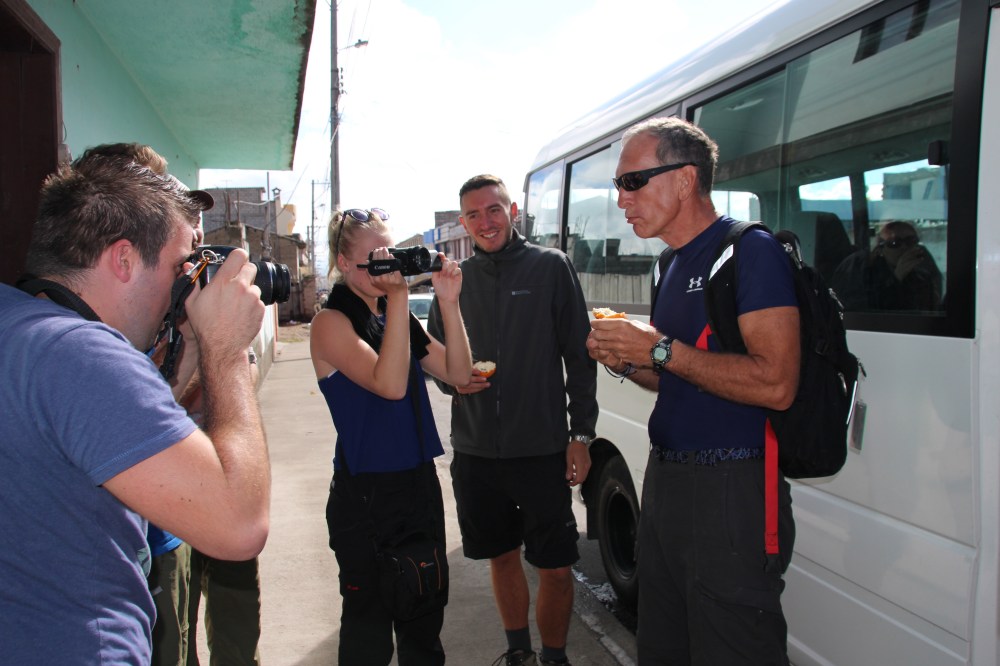
Jonny was eager to purchase some fruit, recommended by Omar, it’s named Grancila and is a family member of the more commonly known, passionfruit. We managed to weave our way through the market, trying to take it all in and Hayley avidly filming, fascinated by the scene we were a part of.
Back in the van we all exchanged the different fruits we had brought, Hayley relished the delicious local strawberries off some bulgarian-come-londoner friends, whilst Jonny and ex marine solo traveller, Eric, tried the Grancila. Their eyes widened slightly and eyebrows frowned, a look comparable as to when someone eats a sour Haribo. Hayley was not at all enticed by the fruits odd interior appearance and found it too much of a frogspawn replica to attempt a trial. You have to take said ‘frog spawn’ aka the pip which is covered in a gooey, rubbery substance which looks like the inside of a grape and feels a little like a tiny bath bomb. The trick is to suck this in your mouth-not bite. Jonny and Eric both agreed it was very sweet and the texture unlike anything they could describe. They finished the fruit between them but didn’t opt for seconds.
Second stop: Indigenous Animal market
Hayley has been to many game fairs back home, in which farmers boast their animals and so the stench of manure was oddly familiar. Although the screeching of an unidentifiable animal was far from normal to either of us. Cautiously we approached the market, discovering a large open pen with hundreds of Pigs, Llamas, Sheep and Cows-all for sale. It was an emotionally challenging experience. Whilst we accept alternative cultures and immerse educating ourselves about their customs and different lifestyles, occasionally there are rituals that you just can not agree with or enjoy learning about. This was one of them. Animal lovers or vegetarians reading this may be especially sensitive to some of the details. We are both meat eaters and for us both it was very difficult to watch. Surprisingly it was Hayley who really struggled. Considering she has grown up with a Dad who shoots game as a hobby, and has eaten stag and venison throughout her life, knowingly shot by her Dad and additionally has attended shoots herself with him, you would expect her to be somewhat more adaptable to the situation we found ourselves in. Nonetheless she was much more haunted than Jonny. Documenting on her camera in horror as we walked past piglets in canvas bags, who were pulled out by their feet, squealing and shivering as they were then dumped into the bag of a consumer, swung over a shoulder and carried off. All animals are tied by their legs, making walking near impossible on the short ropes as they are dragged off by paying customers. Lambs frothed at the mouth, the dry noise they made hurt our ears as they were clearly dehydrated and unable to produce a familiar ‘baa’ sound we know too well. The continuous screeching and squalling of all animals rang constantly, it was like a tinnitus sound we were unable to block out. Locals threw their new purchases without care or consideration into the back of their trucks. Animals were beaten by sellers at an attempt to cease the distressed groans that were ringing through our ears. The most disturbing sight of the day was watching a Llama attempt to mate with an unfortunate victimised sheep, who almost suffocated in the process. Indigenous reacted humorously, whilst westernised gawked in horror at such a bizarre and cruel mistreatment. It was difficult to accept, but it is their way of life and has been for uncountable years and whilst we can agree to therefore accept the culture it does not mean that we agree with it.
Third stop: Visiting an Indigenous house
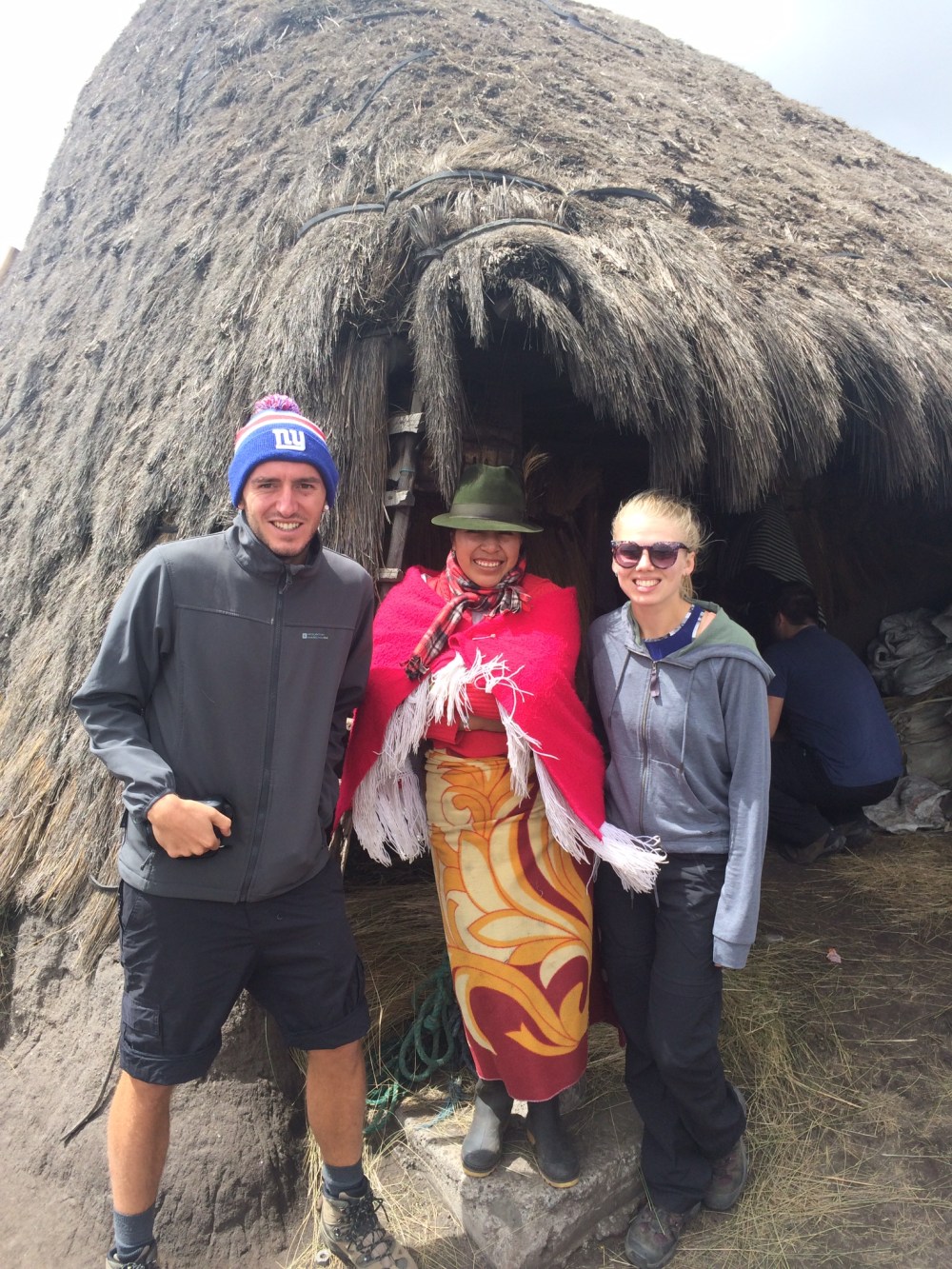
The bus ventured off highway and deep into the Andes, along bumpy roads with more twists and turns than a rollercoaster at a theme park. Feeling rather nauseous, we were happy when the bus came to a halt to inhale some fresh air whilst our feet remained steadily on the ground. The air was thin and clouds rested in the valleys below. We were lead up a short track to a tiny hut, similar to an anglo saxon style home that we learnt about in History lessons at school. Small sides and a large overhanging roof, presumably made of straw and leaves. Please note this is a presumption and not a fact, one of the few questions we did not ask is the exact materials the house is made from. We can say with confidence that our bedroom is larger than this indigenous house, which at one time homed a family of 6, currently there are 3 that remain living here.
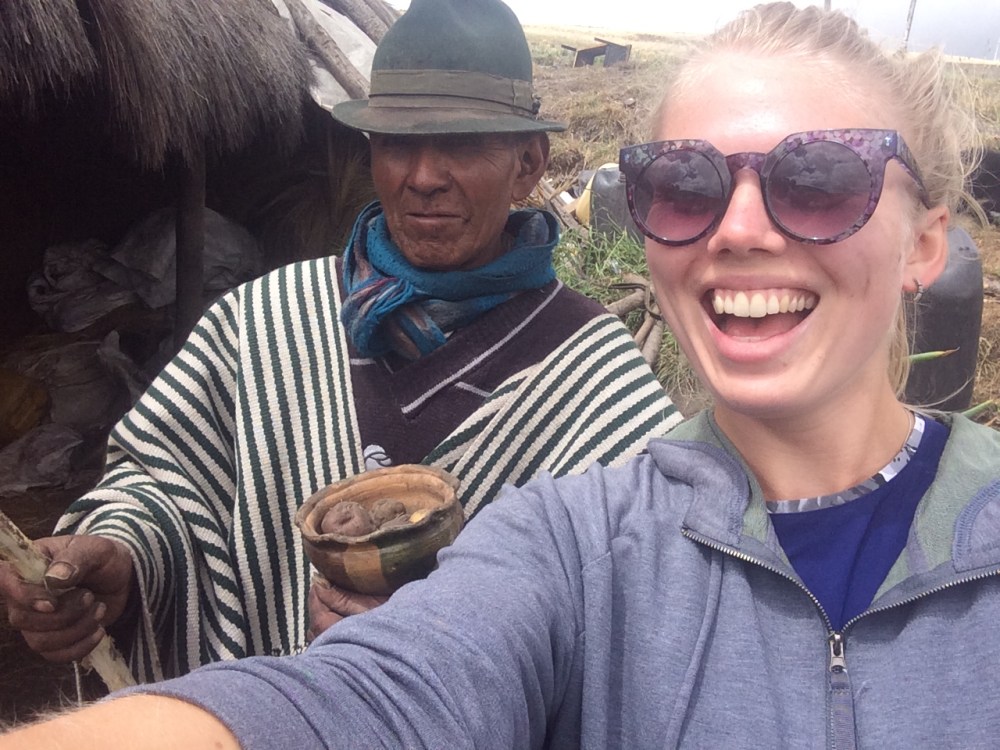
Hayley’s video camera remained glued to her wrist as she was eager to capture everything on camera-as always. But more so as the indigenous are so intriguing and mysterious to our western eyes. There lifestyle is incredibly raw and native, thus fascinating to ourselves. We ducked (yes Hayley too!) under the roof and into their home. No electricity, the only source of light was a small burning candle although a few of us resorted to our phones to provide extra illumination. Even in an indigenous house us westerners are unable to draw ourselves away from the reliance that is technology. We tiptoed like ballerinas on pointe, as the interior is carpeted with 250 live and squeaking guinea pigs! This is absolute truth we promise you. They use these to trade at markets occasionally but they have other values you probably would not consider. Firstly they act as a radiator at night, providing warmth to the house where central heating is not an option. Secondly they are medicinally used when the indigenous are sick they do not visit doctors, instead they perform a traditional ritual in which they hold the guinea pig in their hands and circle it round their bodies, hoping to pass any illness over to it. If they are very sick then once passed to a guinea pig it can result in their unfortunate death, in which case the indigenous will perform an autopsy in an attempt to learn what sickness they had been fated with. A remarkable practice of medicine. We were shocked to learn the family share one bed (remember there used to be 6 of them!). It is a mattress elevated on stilts just a few metres above the ground. Further to this there is one large cooking pot and a self constructed stove. Omar had requested that we do not look upon the indigenous as poor or pity them, but we recognise their way of life and in meeting them learn they are very happy with it. The 3 family members were in fact some of the happiest individuals we have ever met. They welcomed us into their home with large grins and friendly eyes, gesturing us inside. Although they do not own cameras they were not shy of them, in contrast they encouraged photographs and the man of the family had our belly’s aching with laughter as he gathered props of home grown vegetables, posing for our entertainment. It was time to say goodbye to our new friends, it was extremely generous of them to allow us into their home and we feel privileged to have increased our cultural understanding as a result of this visit.
Fourth Stop: Lake Quilotoa
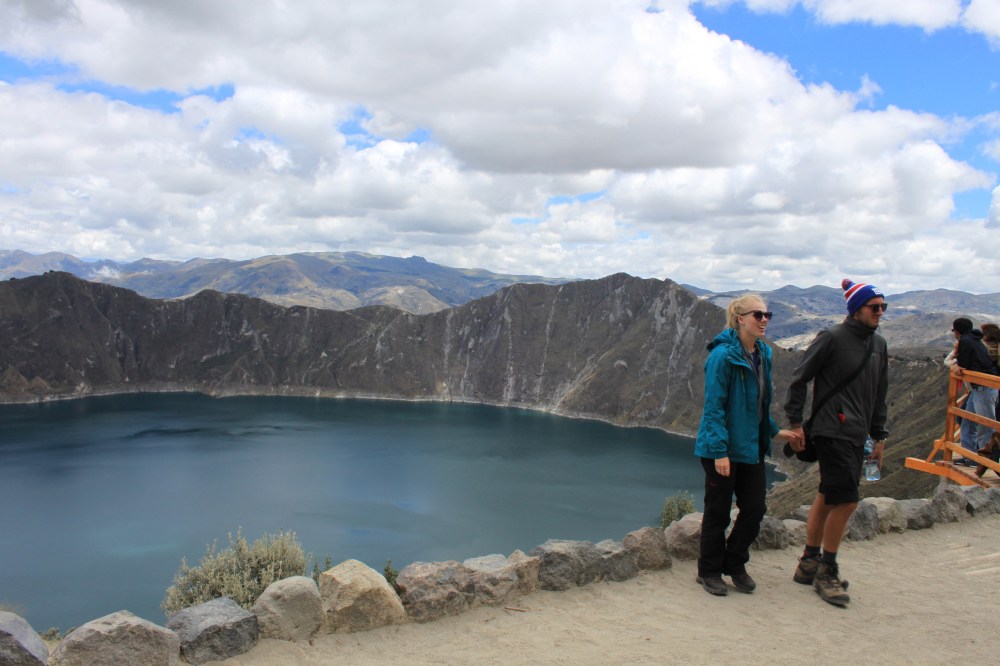
Lake Quilotoa is nestled inside the embrace of an active volcano’s crater. Our breath was stolen firstly by the lack of oxygen in the ever thinning air, and secondly by the view we were sighted before. A turquoise abyss peacefully sits protected by dramatic shards of vicious volcanic rock, creating a safe haven for the lake and with it a tranquil atmosphere.
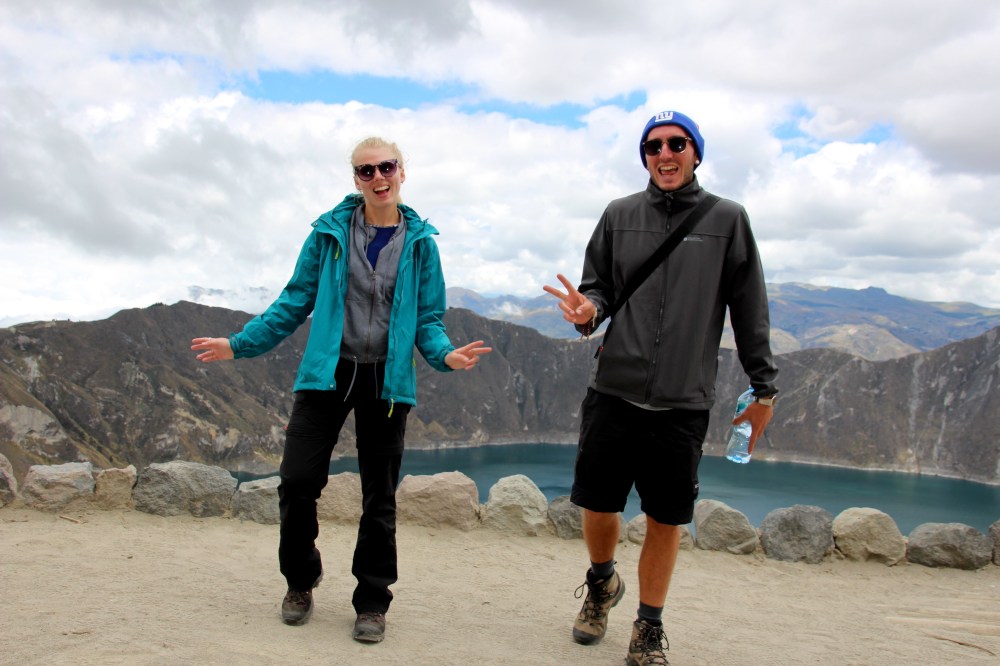
It takes on average 30 minutes to descend to the bottom, but that is not including any stops for photographs…
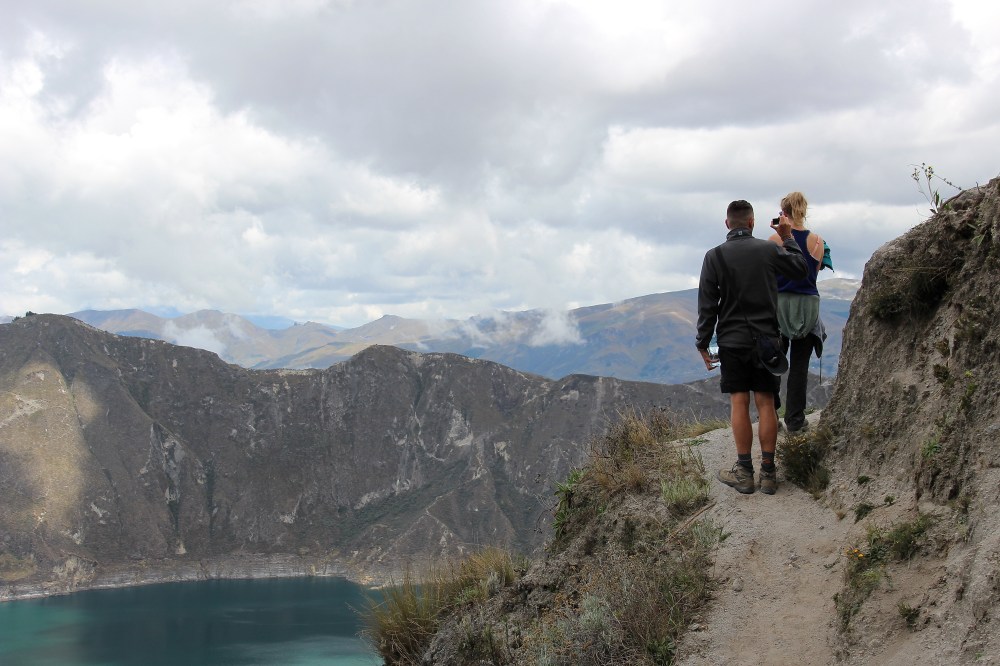
It took us just over an hour, pausing every few metres for another magnificent photo, soaking up every inch of this most picturesque place.
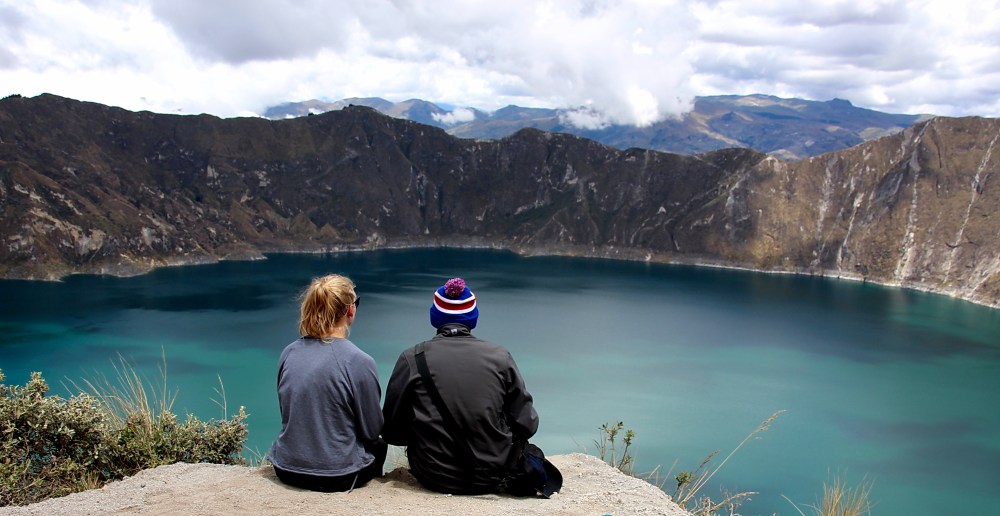
The decline down to the lake was relatively easy, the only trouble we encountered was the sandy rock surface was sometimes slippy, but it was not a large issue. The challenge was the incline back up to the peak where we had begun. We were in high altitude, the lake situated at approx 3700 metres whilst the top of the crevasse is an oxygen thief at around 4100 metres high. Downhill this did not have a noticeable affect on us. Uphill was a different story.
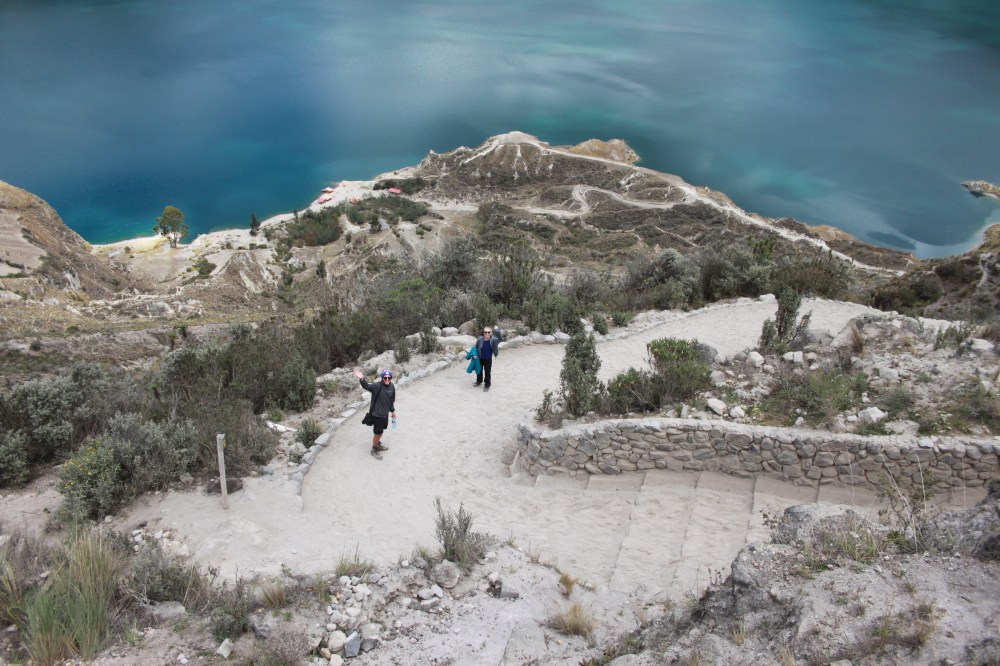
It only took a few metres for Hayley’s struggle to become apparent, and evidently this was going to be a much harder task for her. Altitude affects everyone differently, it is hard to know how you will react to it, however we can assume that Hayley’s asthma was highly likely another strain and therefore made the ascending journey more difficult. Jonny lead the way encouragingly, assisting Hayley and stopping frequently for much needed rests. It is not an exaggeration to admit that every 10 steps Hayley was left at times gasping for air, like a fish out of water. The blazing sun was not helpful, the intensity of the heat is increased due to the height we were at; literally closer to the sun. Everyone uphill was struggling and despite Hayley’s battles we still managed to reach the top, passing other climbers, as well as being over taken by members of our group who had opted to take a mule back to the top. We managed to ascend in under an hour, an achievement considering Hayley now resembled a wilted plant in desperate need of watering. Feeling nauseous is a common altitude side effect, so Jonny tempted Hayley with some crackers and water to try abolish the sickness she was experiencing. Backpackers should not be arrogant to the altitude, Hayley is physically very fit and healthy, asthma aside this could have been her reaction nonetheless. Upon return to the bus we learned almost everyone had opted to take a mule up in the end, as it was too challenging uphill. Many travellers opt to trek the entire area, which can take up to 3 days. We would advise you pack extremely light, neither of us had a rucksack and it was very tough just the short trek to the lake and back. However it is absolutely worth your energy, even if your lungs do have to work harder than Usain Bolt’s in an olympic sprint.
Our day was drawing to a close, we stopped off briefly for a late lunch then before heading back to Quito we made a stop off at a canyon close by for some sightseeing and a group picture..
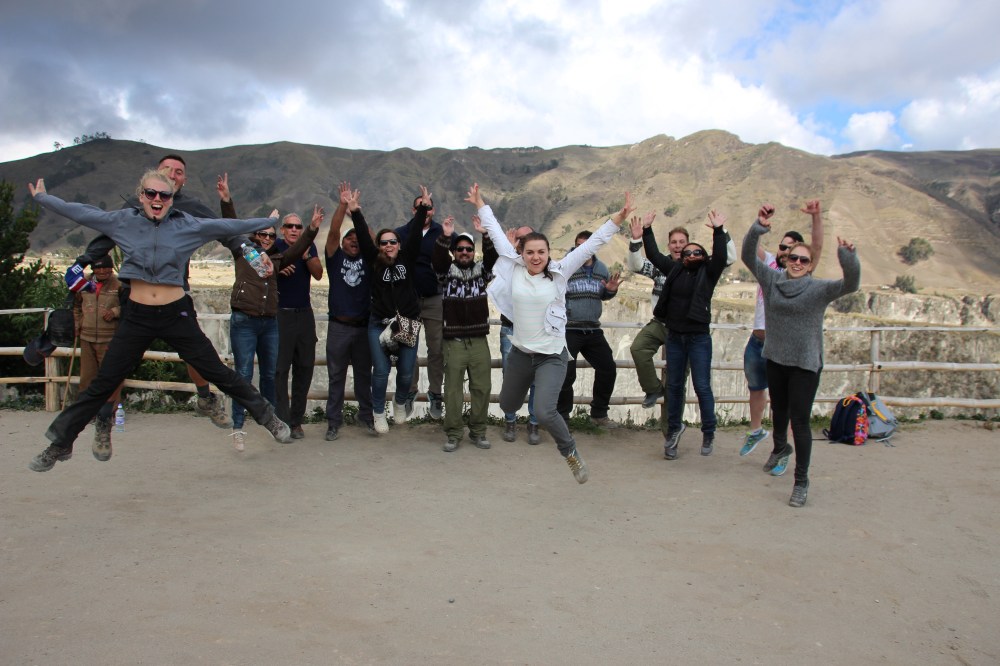
Arriving at our hostel around 7pm; exhausted. The day was tiring but undoubtedly worth it. If like us you are on a restricted time schedule and are unable to dedicate more than a day to Quilotoa then we would highly recommend booking on a day trip. On top of all we experienced it was great to meet other backpackers and exchange tips for other areas we are yet to see. If you stay at Blue House Hostel in Quito then they manage this trip weekly and will organise it for you.
In our next post read about how we swung off the edge of the world in Banos!
Jonny & Hayley 🙂
 theunchartedworld