Rio de Janeiro is a fantastic city with much to boast about, the famous Copacabana beach, the largest carnival in the world, Christ the Redeemer a new wonder of the world, just to name a few that generically spring to mind. Ranted and raved about by tourists, adored by locals and lets not forget the generous climate and geographical location. A city set in a tropical paradise with white sandy beaches and plenty of places to party.
However, alongside all this Rio comes with a tainted reputation of it’s infamous Favela’s (shantytowns). Stereotyped as drug dens where children are groomed into trafficking and gun crimes, controlled by gangsters with no desire for authority and every desire for control by fear. They are set back on the hills of Rio and 20% of the city’s population lives within Favela’s. Unfortunately it is no lie that crime is an issue within Rio and yes the Favela’s are evidently an example of poverty, however we learnt a lot about them and how the government is assisting in pacifying Favela’s and it totally changed our perception. It might surprise you to learn that our hotel was situated at the very start of a Favela, it was directly behind us.
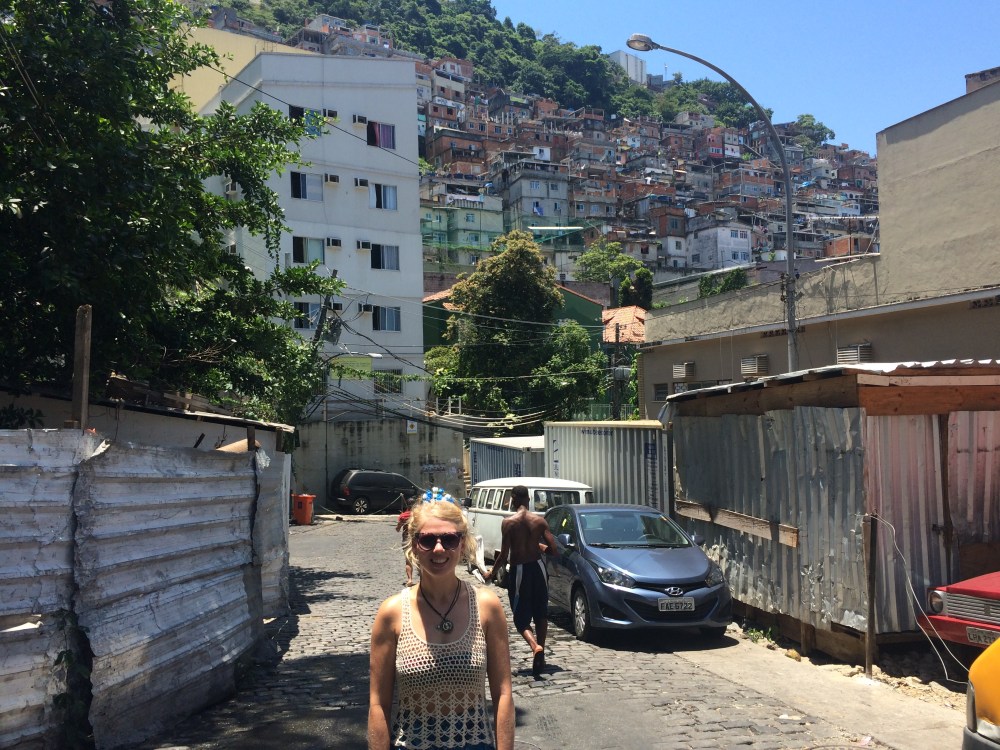
It was a pacified Favela, which means the police were able to go in and control a lot of the crime and assist those living there in steering away from drug trafficking. We felt safe at all hours of the day and night, there was not one incident which made us feel threatened. Eager to learn more about Favela culture and the truth behind the condensed communities, we booked on a tour.
These tours are recommended and very safe. We even took our camera’s on the tour, which had remained in our suitcases since arriving in Rio, as advised by many that it was not a wise decision to walk around the streets with them. The tour was short and sweet, in just a few hours we were educated on the history, culture and community within Favela’s and visited two pacified ones.
The first stop en route is where local artists from Favela’s sell their paintings to tourists. Several tables aligned with impressive artistry work neatly arrayed, each stall was unique. Behind these stalls was a backdrop of the city, a fine view of Rio. We were impressed with the English speaking skills of the people, extremely friendly and welcoming they greeted us with our native tongue and it was a relief to be able to communicate. They spoke better english than anyone we had met in Brazil yet (bar our guide) and further to this they are self taught. The temptation of purchasing a painting by a lovely, generous lady who patiently showed us her artwork was too much, we caved and now own one of her stunning acrylic works.

Next on the agenda was a trip to the largest Favela in Rio and also South America, Rocinha. We were able to wander the streets freely and little interest was payed to our group, apart from a few smiles, nods and welcoming ‘Ola’s’. We were taken to a viewing platform, where our guide pointed out several interesting buildings, including hospitals, schools, community centres and government assisted housing. It is rather emotionally challenging to see the small houses, crafted from scratch by hardworking locals eager to provide a home for their family. They are undoubtedly overcrowded and the safety of each house is questionable, despite this we were informed that many men choose to work in construction, so they have the knowledge to build their own home one day. What is perhaps most shocking is the contrast of this Favela, which is situated just across the road from one of the richest and most desirable neighbourhoods in Rio. During the world cup, the hotel team England stayed in was located surprisingly close by, and one time when training they invited local children and football enthusiasts from the Favela to join them.
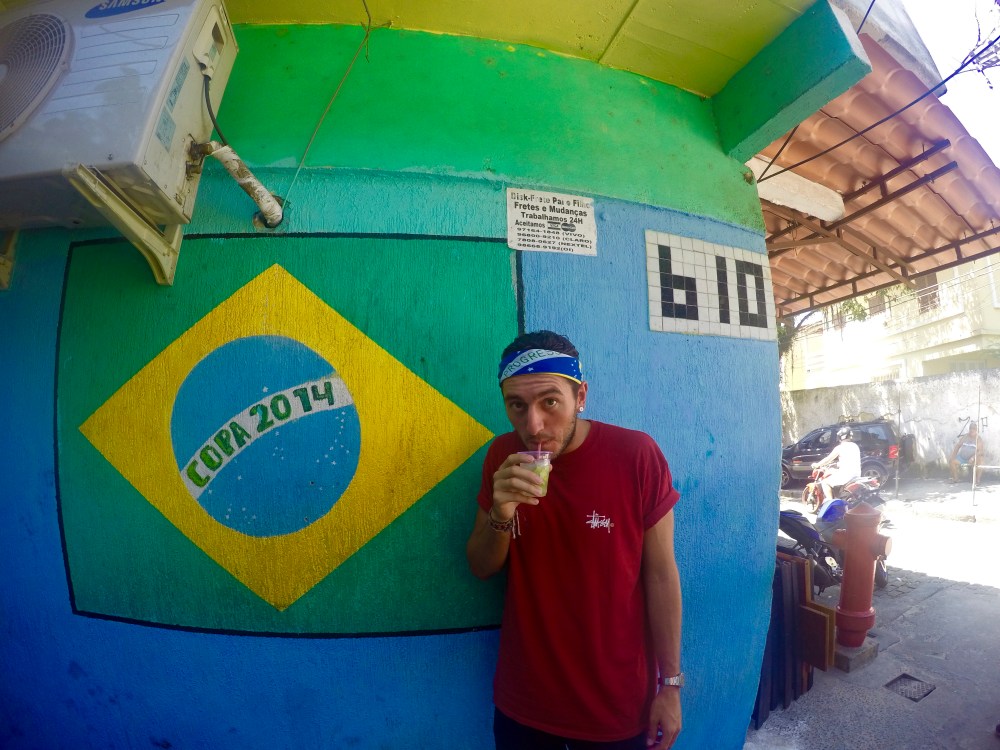
Our guide told us that we would have met many people from Favela’s without realising, as they are hard workers and many of them hold jobs in the poshest hotels and bars as well as retail shops and supermarkets. Actually in the next Favela we visited we were introduced to a local barman, he used to work in one of the most upmarket bars in Rio, serving the wealthiest of customers. Despite this, he chose to leave and set up his own business in the Favela, now the founder of his very own bar and a popular one too. Our throats burned at the sip of his very alcoholic, but delicious Caipiriniha. We also indulged in a recommended snack which is like a cheesy ball crammed with chicken. Simple but extremely tasty.

As we walked through the winded alleyways, connecting the favella like veins in the body, we were reminded of the struggles the people who live here face when it comes to simple tasks. Carrying groceries, a pushchair, perhaps even a wheelchair can be extremely challenging. Generally there is just one road in a Favella, you must walk everywhere. Despite the obvious struggles people living here are happy, and our guide humbly reminded us not to mistake poverty as unhappiness. Similarly she asked that we consider not everyone who lives here has no alternative, many people in fact choose not to leave the Favela’s even if they have the money to. They are content in their self built homes, and friendly neighbourhood. There are plenty of houses which have a shabby exterior but inside you will find nice furniture, large televisions and some have air conditioning.
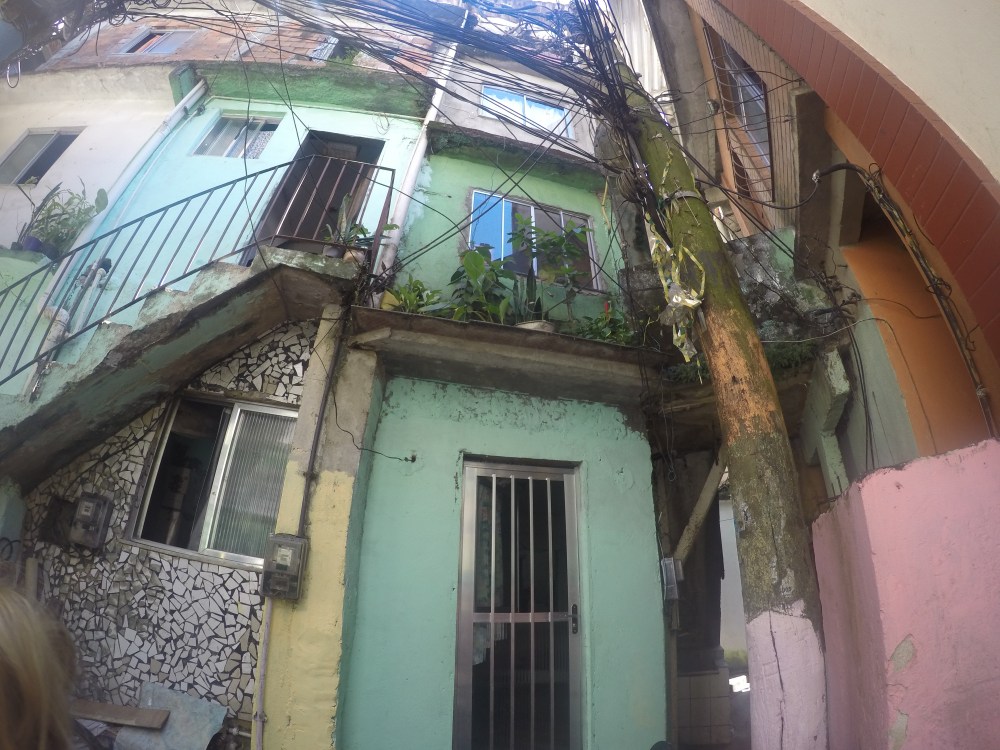
What struck us most is the immense feeling of community that echoes through the Favela’s. Many times we observed neighbours greeting each other with a warm embrace, laughing and chatting with such familiarity. It genuinely was heart warming to see. We would like to add that we never once felt threatened, or like we were attracting any form of negative attention nor targeted for our obviously expensive possessions. We were welcomed, greeted with kindness and respect by the people living in these Favela’s, it was refreshing and reassuring.
If you want to see Rio beyond the glamorous stretch of Copacabana and Ipanema hotels, and outside of it’s tourist attractions then you must do this tour. It really gave us an educational insight, more than that it was inspiring to hear some of the more personal stories about success of the Favela people and how it has changed since the pacification of the police. We aren’t saying that they are places which are safe to wander alone, in fact regardless of our guide assuring us that in the daytime it would be okay to explore the pacified Favela behind our hotel, we still did not feel comfortable doing so. That is why the tours are so brilliant, and 50% of your money goes directly to the Favela’s community projects.
We hope you experience one of these tours and leave as culturally fulfilled as we did.
Jonny & Hayley 🙂
 theunchartedworld